
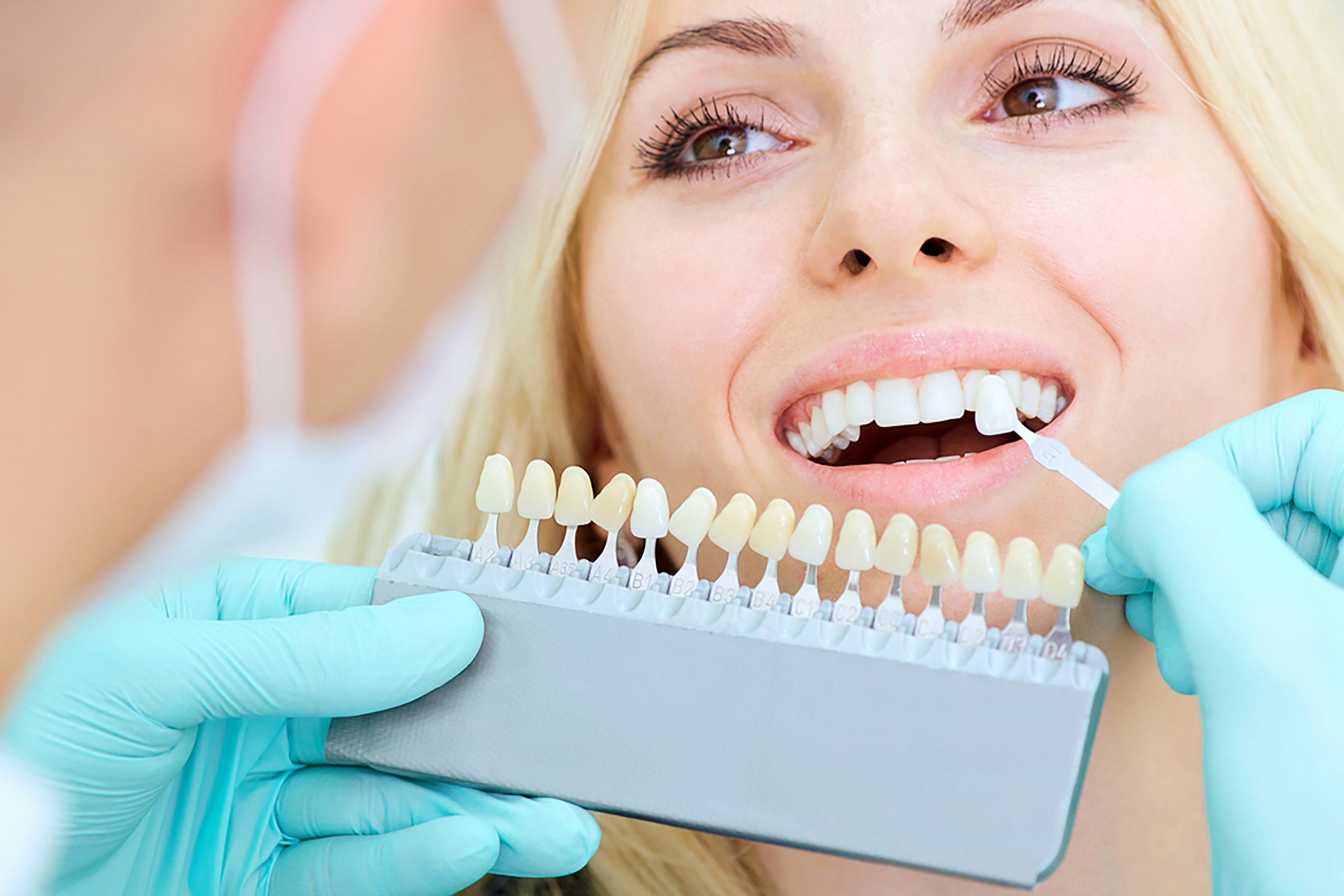
At Sydney Smile Care, we often get questions from patients about teeth whitening. Here, our dentists answer six of the most frequently asked questions to help you understand how teeth whitening works and how to maintain a bright smile.

1. Why aren’t teeth naturally white? Can they ever be completely white?
Firstly, it’s important to note that teeth are not bones, even though they share some similarities. Teeth are mainly made up of enamel and dentine, and the colour of your teeth comes from a blend of these two layers.
Enamel is the hard, outer layer, slightly translucent and generally white with a hint of blue.
Dentine, which lies beneath the enamel, is naturally yellow-brown.
Children often have whiter teeth because their enamel is thicker. As we age, enamel naturally wears down, revealing the dentine underneath. Tiny cracks and scratches develop in the enamel over time, which trap food and stains, gradually changing the colour of your teeth.
Everything we eat or drink can affect our tooth colour, from vegetables and fruit to meat. Certain substances like coffee, red wine, and tobacco are particularly prone to staining teeth. For smokers, nicotine can settle into the microscopic pores of the enamel and darken over time.
So while teeth won’t ever be “perfectly white,” professional whitening treatments can safely enhance their brightness.
2. Can I prevent my teeth from discolouring naturally?
You can limit discolouration, but you can’t stop it entirely. Here are some tips to keep your teeth looking bright:
Brush correctly: Use a soft, dense-bristled toothbrush (like CS 5460) or an electric toothbrush (Hydrosonic PRO) to clean every surface of your teeth.
Avoid staining foods and drinks: Coffee, tea, red wine, and sugary foods with acids (like citrus or soft drinks) can erode enamel, making it easier for stains to settle.
Quit smoking: Tobacco is one of the most significant causes of yellowing teeth.
Even with perfect oral hygiene, enamel naturally wears over time. Preventing all discolouration isn’t possible—but you can slow it down.
3. How do professional teeth whitening treatments work?
Professional teeth whitening typically involves two steps:
Whitening – A gel containing a peroxide-based agent (like hydrogen peroxide) is applied to the teeth. This breaks down organic compounds that cause stains.
Polishing – After whitening, the dentist smooths the tooth surface to enhance brightness and reduce surface roughness where stains can accumulate.
High-strength whitening gels must always be applied by a dentist in a controlled environment to protect enamel and gums. Not everyone is a suitable candidate for professional whitening, so a consultation is always necessary.
4. Does whitening or polishing damage the enamel?
Whitening and polishing can slightly thin enamel, potentially causing temporary tooth sensitivity. People with naturally thinner enamel may be more susceptible.
Dentists carefully assess each patient and choose the safest method and concentration of whitening agents. Following post-treatment care instructions is essential to maintain results and minimise sensitivity.
Remember: even after whitening, teeth are still exposed to foods and drinks that can cause staining. Regular maintenance is key.
5. Can enamel be restored once it’s worn?
Unfortunately, enamel cannot regenerate. Unlike bones or other tissues, once enamel is lost, it’s gone permanently.
The best way to protect your enamel is through:
Gentle, thorough brushing with a soft-bristled toothbrush
Avoiding harsh abrasive toothpaste
Using fluoride or enamel-remineralising toothpaste
Professional care and regular dental check-ups help preserve your enamel while keeping gums healthy.
6. What about at-home whitening products?
Some over-the-counter whitening products are available at pharmacies or online. These vary in strength, and misuse can permanently damage enamel.
A safer alternative is whitening toothpaste. While slower to show results, they gently remove surface stains without harming enamel. Ingredients like glucose oxidase (found in some toothpaste like Be You) convert sugars into oxygen, helping to reduce stains naturally.
Last But Not Least!
Tooth colour depends on enamel thickness, enamel shade, and dentine colour.
Whitening treatments are safe when supervised by a dentist but don’t stop natural wear and staining.
Good oral hygiene, avoiding staining foods and drinks, and professional care are the best ways to maintain a bright smile.
Tooth colour depends on enamel thickness, enamel shade, and dentine colour.
Whitening treatments are safe when supervised by a dentist but don’t stop natural wear and staining.
Good oral hygiene, avoiding staining foods and drinks, and professional care are the best ways to maintain a bright smile.
At Sydney Smile Care, we tailor whitening treatments to your needs and guide you on maintaining long-lasting results. Book a consultation today (02) 9747 1988 to see how we can help you achieve your brightest smile safely.
No responses yet