
What Is a Dental Implant?
A dental implant involves placing a small titanium post into the jawbone to act as an artificial tooth root. Once the implant integrates with the bone, a custom-made crown, bridge, or denture is attached to restore appearance and function.
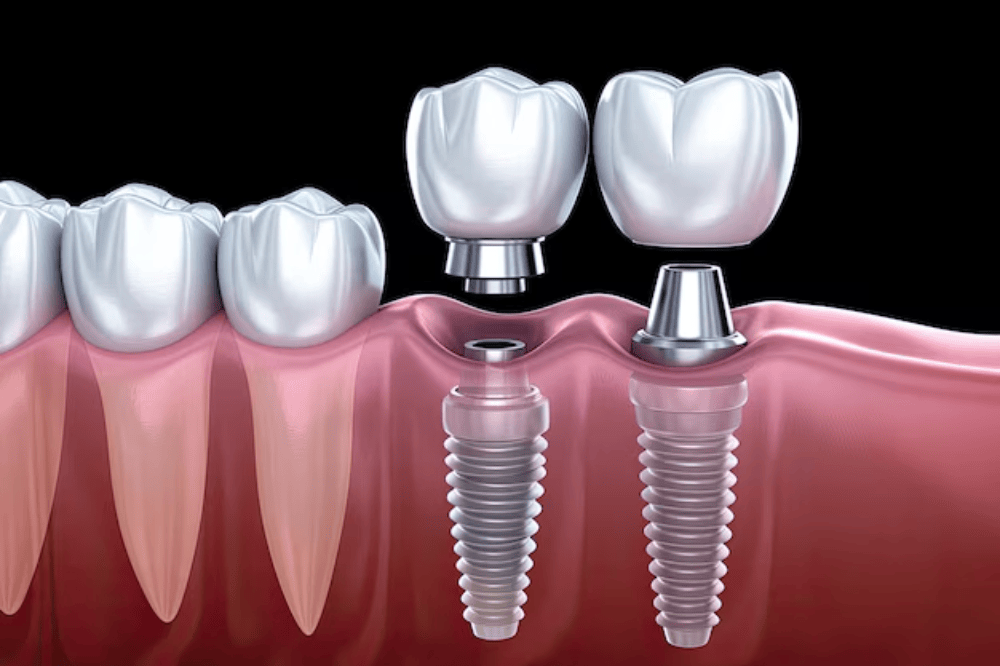
Each implant typically consists of three parts:
Implant Post (Titanium): Acts as an artificial tooth root.
Abutment: Connects the implant to the restoration.
Crown/Bridge/Denture: The visible replacement tooth or teeth, crafted from durable dental materials.
Dental implants are designed to look and function like natural teeth, although results can vary depending on bone quality, oral hygiene, and individual health factors.
Who Can Consider Dental Implants?
Dental implants may be suitable for:
Adults (18+) with healthy gums and sufficient bone density
Patients missing one or more teeth
Individuals in generally good oral and overall health
Your dentist will review your health history, medications, and jawbone condition before confirming suitability. Certain health conditions or habits — such as uncontrolled diabetes, smoking, or bone loss — may require additional preparation or alternative treatment options
Benefits of Dental Implants
Dental implants may offer:
Tooth replacement without affecting adjacent teeth
Improved chewing and speech compared with removable dentures
Support for facial structure and aesthetics
Use of biocompatible, well-tolerated materials
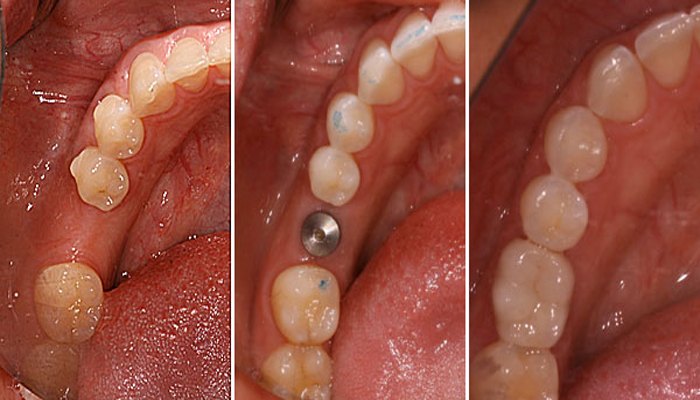
Treatment Timeline
The overall process typically spans 3 to 9 months, depending on bone quality, healing response, and the number of implants placed.
Typical steps include:
Comprehensive assessment of oral and general health
Implant placement – usually takes between 60 and 120 minutes, depending on case complexity
Healing and integration – generally 2 to 7 months, varying with medical history and bone condition
Restoration (crown, bridge, or denture) placement – once healing is complete, this may require two short appointments
Note: Treatment times and healing periods differ between patients. Your dentist will provide an individualised plan and discuss expected timelines following your assessment.
Safety Considerations
Implant procedures are generally safe when performed by qualified dental professionals.
You may experience temporary swelling, mild discomfort, or bruising.
Although rare, complications such as infection or implant failure can occur — highlighting the importance of sterile surgical techniques and follow-up care.
When Immediate or Multiple Implants Are Considered
Immediate restoration: May be suitable for select patients with adequate bone support.
Multiple or full-arch implants: Several implants can sometimes support multiple teeth rather than one per tooth.
Your dentist will assess whether these options are appropriate based on your individual case.
Factors Influencing Success
Key factors that contribute to successful outcomes include:
Jawbone quality and volume
Experience and planning of the treating dentist
Strict infection control protocols
Patient compliance with oral hygiene and reviews
Even under ideal conditions, implant success cannot be guaranteed.
Costs and Considerations
Implant treatment involves advanced technology, skilled clinicians, and high-quality materials.
At Sydney Smile Care, costs of dental implants vary depending on the implant type, number of implants, and clinical complexity. Your dentist can explain cost-benefit factors and available payment options during consultation.
When Implants May Not Be Suitable
Dental implants may not be recommended for:
Patients with certain uncontrolled health conditions
Insufficient bone volume (unless grafting is completed)
Heavy smokers or alcohol users
Alternative options such as bridges or removable dentures can be discussed where appropriate.
Recovery and Follow-Up
Recovery varies based on individual health, the number of implants placed, and surgical complexity.
Mild discomfort, swelling, or bruising may occur for a few days. Your dentist will guide you on pain relief, soft foods, and hygiene measures to support healing.
Choosing a Reputable Implant Provider
When selecting a dental implant clinic, ensure that:
Procedures are evidence-based and clinically justified
Infection control standards are strictly followed
You receive transparent communication about risks, benefits, and expected outcomes
No unrealistic promises or guaranteed results are made
At Sydney Smile Care, we provide thorough assessments, individualized treatment planning, and care that aligns with national safety standards.
Thinking about dental implants in Burwood or Cabramatta? Call Sydney Smile Care today on 9747 1988 or 9727 6688 to arrange a consultation with our qualified dental team. Our dentists will provide clear guidance and discuss whether implants may be a suitable option for you.
No responses yet