

Why Socket Preservation Matters After Tooth Extraction
Losing a tooth can be tough, and sometimes a tooth needs to be removed because of damage or infection. But did you know that after a tooth is taken out, the bone where the tooth used to be can shrink or disappear over time? This bone loss can change the shape of your smile and make it harder to replace the tooth later.
Fortunately, there’s a simple way to help keep your jawbone healthy called socket preservation.
What Is Socket Preservation?
Socket preservation is a procedure done right after a tooth extraction. Instead of leaving the empty hole (or “socket”) to heal on its own, your dentist places a special material inside to help keep the bone from shrinking. This material acts like a scaffold that encourages your body to rebuild and keep the bone strong and full.
Why Is Bone Loss a Problem?
When a tooth is removed, the bone around it loses the stimulation it gets from chewing and starts to shrink naturally. This process can cause:
Changes in the shape of your gums and jaw
Difficulty placing dental implants later on
A less natural look if you use dentures or bridges
Possible changes in how your face appears
Without socket preservation, bone loss can happen fairly quickly within the first few months after extraction.
How Does Socket Preservation Help?
Scientific studies show that socket preservation helps maintain the size and shape of the bone where the tooth once was. According to a systematic review on PubMed published in 2022, different materials used in socket preservation effectively reduce bone loss both in height and width, preparing the site well for future dental implants or other treatments.
Another meta-analysis further confirmed that socket preservation leads to better bone volume and decreases the need for extra bone grafting during implant placement, making your dental restoration easier and more predictable (Source).
What to Expect During the Procedure
The dentist or oral surgeon will:
Remove the tooth carefully.
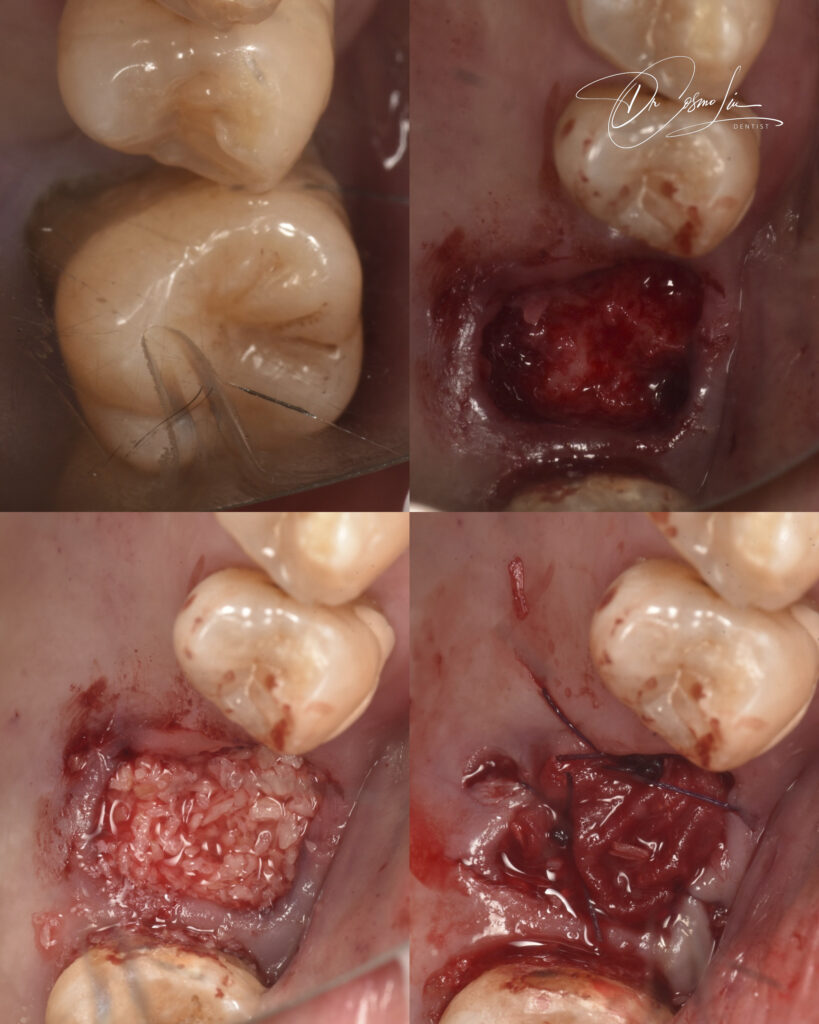
Fill the socket with a bone graft material right away.
Cover the area with a protective layer or membrane to keep everything in place.
Close the site with stitches if needed.
You’ll likely experience less discomfort and heal faster compared to letting the socket heal without preservation.
Is Socket Preservation Right for You?
If you’re planning on replacing your missing tooth with an implant or want to keep a healthy jawbone after extraction, socket preservation is a great option. It helps protect your smile and keeps your future dental choices open.
Talk to your dentist about socket preservation to see if it fits your treatment plan. See below for one of Dr Cosmo’s examples of a socket preservation. This upper molar had severe bone loss with an active gum infection inside. This led to the tooth becoming loose and painful while eating. In the interest of preserving as much bone as possible for a future dental implant, socket preservation was performed after the infection was cleaned out.
In Summary
Socket preservation is an easy and effective way to save your jawbone after tooth removal. Protecting the bone helps keep your smile looking natural and makes future dental treatments more successful. Scientific reviews back up that socket preservation improves bone maintenance and leads to better long-term results.
Investing in this procedure now can save time, money, and hassle down the road.
References
Alenazi A, Alotaibi AA, Aljaeidi Y, Alqhtani NR. The need for socket preservation: a systematic review. J Med Life. 2022;15(3):309-312. https://pubmed.ncbi.nlm.nih.gov/35450006/
Alavi SA, et al. A systematic review and meta-analysis on the use of tissue repair cells in socket preservation. 2024. https://www.sciencedirect.com/science/article/pii/S2212440324003766
👉 If you’re facing a tooth extraction, ask your dentist about socket preservation. It’s a simple step that can make a big difference for your smile.
No responses yet